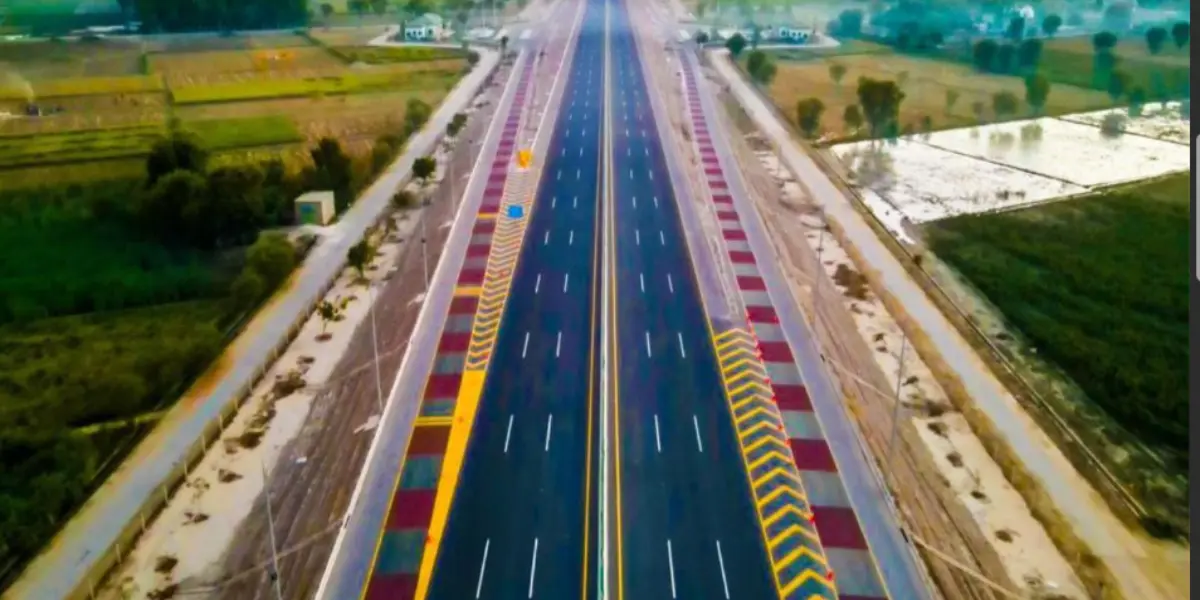
Road marking visibility is not just a matter of paint on asphalt it is a critical safety requirement governed by rigorously defined international standards. Whether it is a busy motorway in Europe, a rural highway in Asia, or an urban intersection in North America, road markings must meet specific visibility benchmarks to guide drivers safely, especially in adverse weather, low-light conditions, and high-speed environments.
Understanding international standards for road marking visibility is essential for highway engineers, road safety professionals, pavement marking contractors, and government transportation agencies. These standards ensure that markings remain visible, durable, and effective across diverse climates and traffic conditions.
This article breaks down the key global frameworks, technical specifications, and compliance requirements that define road marking visibility worldwide.
Why Road Marking Visibility Standards Matter
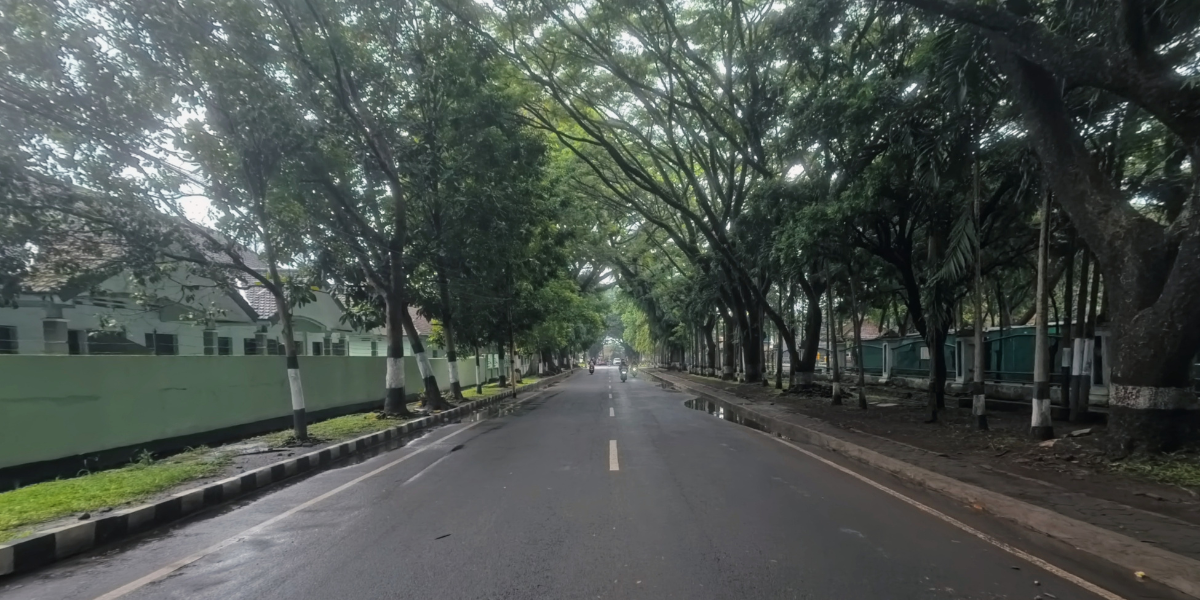
Poorly visible road markings are directly linked to traffic accidents, lane departure incidents, and pedestrian injuries. According to road safety research, a significant percentage of nighttime accidents involve inadequate or faded lane markings.
International standards exist to:
Ensure consistency in road safety across different countries and regions
Define minimum retroreflectivity levels for nighttime and wet-weather visibility
Standardize colors, dimensions, and placement of road markings
Provide a measurable framework for quality control and maintenance
Without these standards, road authorities would have no consistent benchmark to evaluate marking performance or procure compliant materials.
Key International Organizations Setting Road Marking Standards
Several global and regional bodies are responsible for establishing and maintaining road marking visibility standards:
Vienna Convention on Road Signs and Signals (1968)
This United Nations treaty forms the backbone of international road sign and marking harmonization. Member countries agree to use standardized symbols, colors, and marking formats. While the convention does not define retroreflectivity values in technical detail, it establishes the foundational framework for road marking color and placement.
PIARC (World Road Association)
PIARC publishes technical reports and guidelines on road marking performance, maintenance, and materials. Their work supports member countries in aligning national standards with best practices in road marking visibility.
ISO (International Organization for Standardization)
ISO standards such as ISO 7457 and related specifications define test methods for evaluating road marking materials, including retroreflectivity, color, and skid resistance.
CEN (European Committee for Standardization)
In Europe, CEN has developed the EN 1436 standard one of the most technically detailed documents on road marking visibility in the world. It is widely referenced beyond Europe as a best-practice benchmark.
The European Benchmark for Road Marking Visibility
The EN 1436 standard (Road Marking Materials Road Marking Performance for Road Users) is among the most comprehensive international frameworks for measuring and classifying road marking visibility. It covers:
Retroreflectivity (RL)
Retroreflectivity measures how much light a road marking reflects back toward a driver’s eyes at night. EN 1436 classifies retroreflectivity into performance classes, with minimum values measured in mcd/m²/lux (millicandelas per square meter per lux):
Performance Class | Minimum RL Value |
R0 | No requirement |
R1 | ≥ 100 mcd/m²/lux |
R2 | ≥ 150 mcd/m²/lux |
R3 | ≥ 200 mcd/m²/lux |
R4 | ≥ 300 mcd/m²/lux |
R5 | ≥ 400 mcd/m²/lux |
Higher-speed roads and motorways typically require higher retroreflectivity classes to ensure adequate nighttime visibility at greater distances.
Wet Night Visibility (RW)
EN 1436 also addresses retroreflectivity under wet conditions, a critical factor in rainy climates. Wet retroreflectivity classes (RW0RW3) define performance when road surfaces are covered with a film of water.
Daytime Luminance (Qd)
This measures how visible markings are during daylight hours. The standard defines luminance coefficients for both white and yellow markings.
Color Coordinates
EN 1436 specifies precise chromaticity coordinates for road marking colors on the CIE 1931 color space. White markings must fall within defined boundaries for both daytime and nighttime conditions, ensuring visual contrast with the road surface.
Skid Resistance (SRT)
Though not strictly a visibility metric, EN 1436 includes skid resistance values because safe road markings must not become hazardous to pedestrians and cyclists in wet conditions.
ASTM Standards: The North American Framework
In the United States and Canada, road marking visibility is regulated under standards developed by ASTM International (formerly the American Society for Testing and Materials):
ASTM D6359 Minimum retroreflectance of newly applied pavement marking systems
ASTM E1710 Standard test method for measuring retroreflectance of longitudinal pavement markings using a portable retroreflectometer
ASTM D7585 Evaluating retroreflective pavement markings using mobile measurement equipment
The Manual on Uniform Traffic Control Devices (MUTCD), published by the Federal Highway Administration (FHWA), complements ASTM standards by specifying color, width, pattern, and placement of road markings across the US.
For retroreflectivity, the FHWA has established minimum maintained retroreflectivity levels:
White longitudinal markings: 100 mcd/m²/lux (on roads with speed limits ≥ 45 mph)
Yellow longitudinal markings: 50 mcd/m²/lux
These are maintained levels, meaning road authorities must monitor markings and replace them when they fall below these thresholds.
Australian and Asia-Pacific Standards
Australia follows AS 1742.2 (Manual of Uniform Traffic Control Devices Traffic Control Devices for General Use) and relevant state-level guidelines for road marking visibility. Retroreflectivity requirements are aligned broadly with European and North American benchmarks, with additional guidance from Austroads publications.
In Asia, countries like Japan, South Korea, and Singapore have developed national standards influenced by ISO frameworks and EN 1436, with adaptations for local climate and traffic conditions. The increasing adoption of harmonized ASEAN road safety standards is pushing Southeast Asian nations toward greater regional alignment.
Factors That Affect Road Marking Visibility
Understanding international standards also means recognizing the factors that cause markings to degrade below required visibility levels:
Traffic Wear: High-traffic roads experience faster physical wear of marking materials, reducing retroreflectivity and paint thickness.
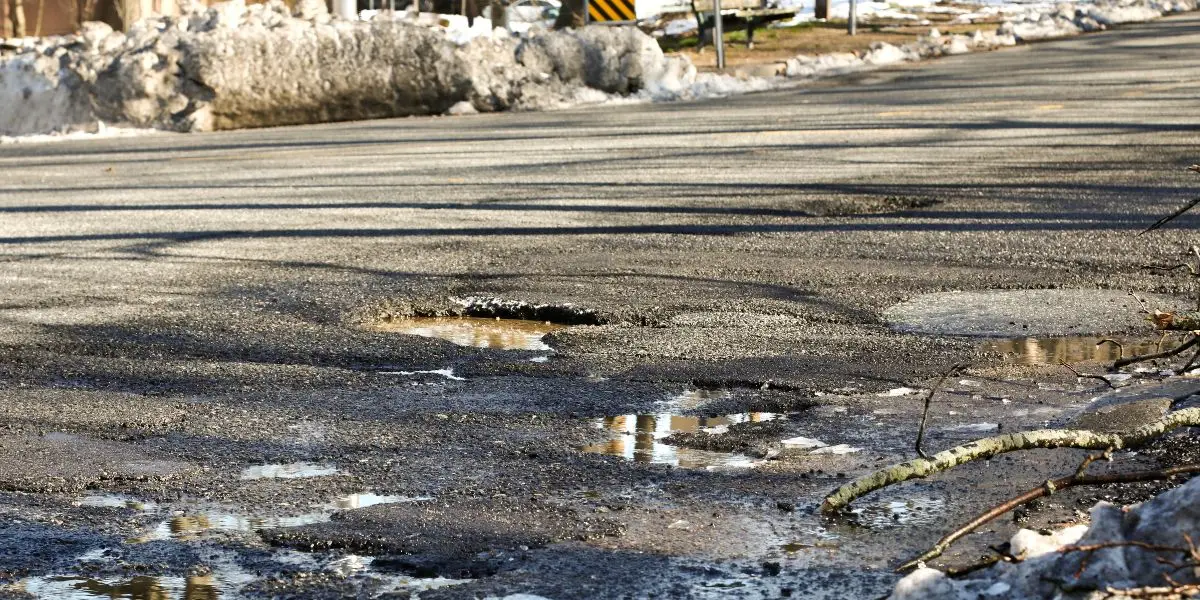
Weather and UV Exposure: Sunlight, rain, and freeze-thaw cycles degrade binders and retroreflective glass beads embedded in markings.
Road Surface Texture: Rough or porous surfaces absorb marking material unevenly, reducing effective retroreflectivity.
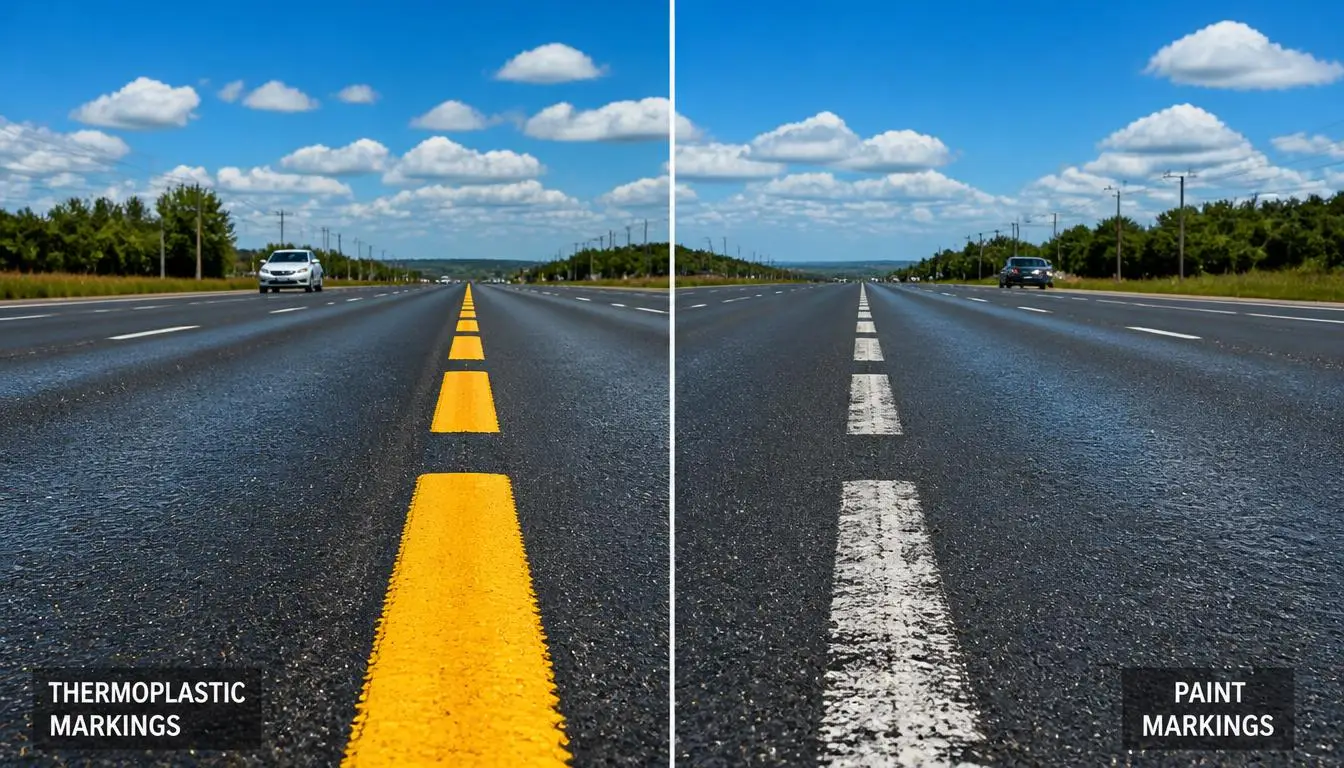
Material Quality: The quality and type of material thermoplastic, paint, epoxy, or cold plastic significantly affects initial retroreflectivity and durability.
Glass Bead Embedment: Retroreflective glass beads must be properly embedded in marking materials to reflect light efficiently. Incorrect application results in premature bead loss and visibility failure.
ASTM Standards: The North American Framework
In the United States and Canada, road marking visibility is regulated under standards developed by ASTM International (formerly the American Society for Testing and Materials):
ASTM D6359 Minimum retroreflectance of newly applied pavement marking systems
ASTM E1710 Standard test method for measuring retroreflectance of longitudinal pavement markings using a portable retroreflectometer
ASTM D7585 Evaluating retroreflective pavement markings using mobile measurement equipment
The Manual on Uniform Traffic Control Devices (MUTCD), published by the Federal Highway Administration (FHWA), complements ASTM standards by specifying color, width, pattern, and placement of road markings across the US.
For retroreflectivity, the FHWA has established minimum maintained retroreflectivity levels:
White longitudinal markings: 100 mcd/m²/lux (on roads with speed limits ≥ 45 mph)
Yellow longitudinal markings: 50 mcd/m²/lux
These are maintained levels, meaning road authorities must monitor markings and replace them when they fall below these thresholds.
Australian and Asia-Pacific Standards
Australia follows AS 1742.2 (Manual of Uniform Traffic Control Devices Traffic Control Devices for General Use) and relevant state-level guidelines for road marking visibility. Retroreflectivity requirements are aligned broadly with European and North American benchmarks, with additional guidance from Austroads publications.
In Asia, countries like Japan, South Korea, and Singapore have developed national standards influenced by ISO frameworks and EN 1436, with adaptations for local climate and traffic conditions. The increasing adoption of harmonized ASEAN road safety standards is pushing Southeast Asian nations toward greater regional alignment.
Factors That Affect Road Marking Visibility
Understanding international standards also means recognizing the factors that cause markings to degrade below required visibility levels:
Traffic Wear: High-traffic roads experience faster physical wear of marking materials, reducing retroreflectivity and paint thickness.
Weather and UV Exposure: Sunlight, rain, and freeze-thaw cycles degrade binders and retroreflective glass beads embedded in markings.
Road Surface Texture: Rough or porous surfaces absorb marking material unevenly, reducing effective retroreflectivity.
Material Quality: The quality and type of material thermoplastic, paint, epoxy, or cold plastic significantly affects initial retroreflectivity and durability.
Glass Bead Embedment: Retroreflective glass beads must be properly embedded in marking materials to reflect light efficiently. Incorrect application results in premature bead loss and visibility failure.
Road Marking Colors and Their International Standards

Color standardization is a key component of road marking visibility. Internationally, the most commonly used colors and their general applications are:
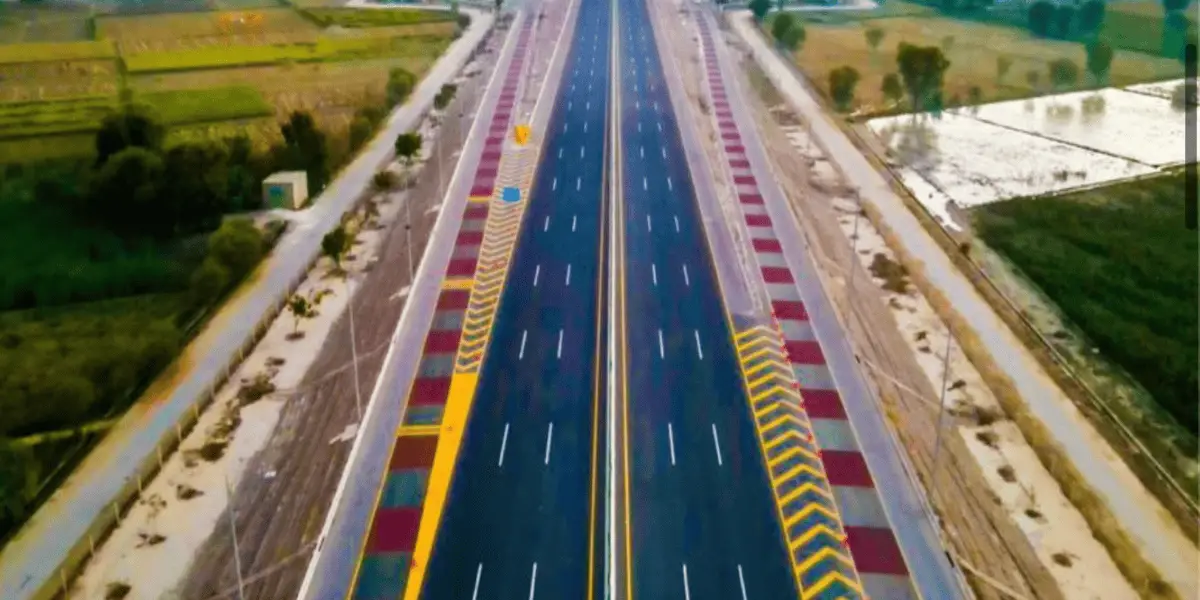
White: Used for lane lines, edge lines, stop lines, pedestrian crossings, and directional arrows. White markings are the most common globally.
Yellow: Used for centerlines, no-overtaking zones, and parking restrictions in North America and many Asian countries.
Blue: Used in some countries for parking zones, particularly accessible parking bays.
Red: Used for bus lanes, fire hydrant zones, and high-priority pedestrian areas in several European and Asian countries.
The Vienna Convention generally recommends white for longitudinal markings and yellow or white for center lines, though national variations are permitted.
Retroreflectivity Measurement and Compliance Testing
To verify compliance with international standards road marking visibility requirements, highway authorities use specialized measurement equipment:
Portable Retroreflectometers:
Handheld devices used for spot-checking individual markings on road surfaces. These measure RL values in mcd/m²/lux.
Mobile Retroreflectivity Measurement Systems (MRMS):
Vehicle-mounted systems that continuously measure retroreflectivity at traffic speeds, enabling network-wide assessment without lane closures.
Laboratory Testing:
New road marking materials are tested in laboratory conditions for retroreflectivity, color, durability, and skid resistance before deployment.
Regular monitoring programs are required by most national road authorities to ensure that markings remain above the minimum maintained visibility thresholds defined by applicable standards.
Emerging Trends in Road Marking Visibility
International standards are evolving to address new challenges in road safety and technology:
Connected and Autonomous Vehicles (CAVs): Road markings must increasingly be readable not just by human drivers but by machine vision systems. New standards are being developed to ensure road markings are machine-detectable in all conditions.
Photoluminescent Markings: Glow-in-the-dark road markings that absorb sunlight and emit light at night are being piloted in several countries as a complement to retroreflective markings.
Smart Road Markings: Temperature-sensitive and interactive markings that display warnings (e.g., ice alerts) are under development, requiring new visibility and performance standards.
Sustainability Standards: Environmental regulations are increasingly influencing road marking material standards, with a push toward low-VOC and water-based formulations that meet the same visibility benchmarks as solvent-based products.
Conclusion
International standards for road marking visibility form a critical layer of road safety infrastructure. From the retroreflectivity classes defined in EN 1436 to the MUTCD guidelines in North America and emerging ISO frameworks in Asia-Pacific, these standards ensure that road markings perform their essential safety function in all conditions day or night, wet or dry.
For road authorities, contractors, and engineers, staying current with these standards is not just a regulatory obligation, it is a commitment to saving lives on the road. As technology advances and autonomous vehicles become more prevalent, the standards governing road marking visibility will continue to evolve, making it more important than ever to remain informed and compliant.
Frequently Asked Questions
Q1. What is the most widely recognized international standard for road marking visibility?
The EN 1436 standard published by the European Committee for Standardization (CEN) is one of the most technically comprehensive and internationally referenced standards for road marking visibility. It defines retroreflectivity, wet night visibility, daytime luminance, and color for road markings and is used as a benchmark by many countries outside Europe.
Q2. What is retroreflectivity, and why is it important in road marking standards?
Retroreflectivity is the ability of a road marking to reflect light back toward its source typically a vehicle’s headlights so that the driver can see the marking at night. International standards define minimum retroreflectivity levels (measured in mcd/m²/lux) to ensure that road markings remain visible in low-light and nighttime conditions. Without adequate retroreflectivity, road markings become virtually invisible after dark, significantly increasing accident risk.
Q3. How often should road markings be checked for compliance with visibility standards?
Monitoring frequency varies by national standard and road classification. High-speed roads and motorways are typically inspected more frequently, often annually or biannually using mobile retroreflectivity measurement systems. Urban roads may be assessed on longer cycles. Most road authorities also trigger inspections after extreme weather events or reports of marking deterioration.
Q4. Do international standards for road marking visibility apply to temporary markings on construction sites?
Yes, many national standards extend visibility requirements to temporary road markings used in construction and maintenance zones. Temporary markings must still meet minimum retroreflectivity thresholds, and in some jurisdictions, higher performance classes are required due to the altered traffic patterns and increased risk in work zones.
Q5. Are road marking visibility standards the same for all types of roads?
No. International and national standards typically differentiate visibility requirements based on road type and speed limit. Motorways and high-speed roads require higher retroreflectivity classes due to greater driver speeds and longer sight distances needed. Urban roads with lower speed limits may have less stringent minimum values, though they still must meet defined thresholds to ensure pedestrian and driver safety.