Road marking paint is one of the most critical and most exposed elements of road infrastructure. Applied directly onto asphalt or concrete surfaces, it must withstand constant traffic, mechanical abrasion, and the relentless pressure of changing weather conditions. Understanding the weather effects on road marking paint longevity is essential for road authorities, highway engineers, and pavement marking contractors who are responsible for keeping road networks safe, visible, and compliant year-round.
From scorching summer heat to freezing winter frost, every climate condition leaves its mark on road paint. This comprehensive guide examines how different weather phenomena degrade road marking paint, which materials perform best in challenging environments, and how maintenance programmes can be optimised to extend marking lifespan.
Why Weather Is the Biggest Threat to Road Marking Paint
Road markings face a uniquely hostile environment. Unlike most painted surfaces, road markings are applied horizontally, meaning they collect standing water, absorb maximum solar radiation, and bear direct wheel loads from thousands of vehicles daily. Weather compounds all of these stresses.
The longevity of road marking paint is directly tied to:
The frequency and intensity of rainfall
Temperature extremes (both heat and cold)
UV radiation exposure
Humidity and condensation cycles
Freeze-thaw cycles in cold climates
Wind-borne debris and sand abrasion in dry regions
When these factors are not accounted for during material selection and application planning, markings can fail within months rather than lasting several years as intended. Poor visibility of faded markings is a documented contributor to lane departure accidents, pedestrian incidents, and driver confusion making weather-driven degradation a genuine public safety concern.
How Rain and Moisture Degrade Road Marking Paint
Rainfall is among the most damaging and consistent weather effects on road marking paint longevity, acting through multiple mechanisms simultaneously.
Water Penetration and Binder Weakening
Road marking paints rely on a chemical binder typically acrylic, alkyd, or epoxy to adhere pigment and retroreflective glass beads to the road surface. When water penetrates the marking film through micro-cracks or porous edges, it weakens the binder’s bond with the substrate. Over time, this leads to delamination, where the marking peels away from the road surface in sheets or flakes.
Wash-Out of Fresh Markings
Newly applied road marking paint is highly vulnerable to rainfall. Most water-based paints require a minimum dry time before they can withstand rain typically between 15 and 30 minutes under standard conditions. Rain falling on uncured markings washes out pigment, reduces film thickness, and displaces retroreflective glass beads before they can properly embed. This dramatically reduces initial performance and shortens the functional lifespan of the marking.
Wet-Weather Retroreflectivity Loss
Even properly cured markings suffer retroreflectivity loss in wet conditions. Water fills the micro-texture of the marking surface, covering the glass beads that reflect headlight beams back to drivers. Without adequate wet retroreflectivity a performance metric defined in standards such as EN 1436 road markings become nearly invisible during and immediately after rainfall, precisely when driver visibility is already reduced.
The Impact of Heat and UV Radiation on Road Marking Paint
In warm and tropical climates, heat and ultraviolet radiation are the dominant weather effects on road marking paint longevity causing distinct types of degradation.
Thermal Expansion and Surface Cracking
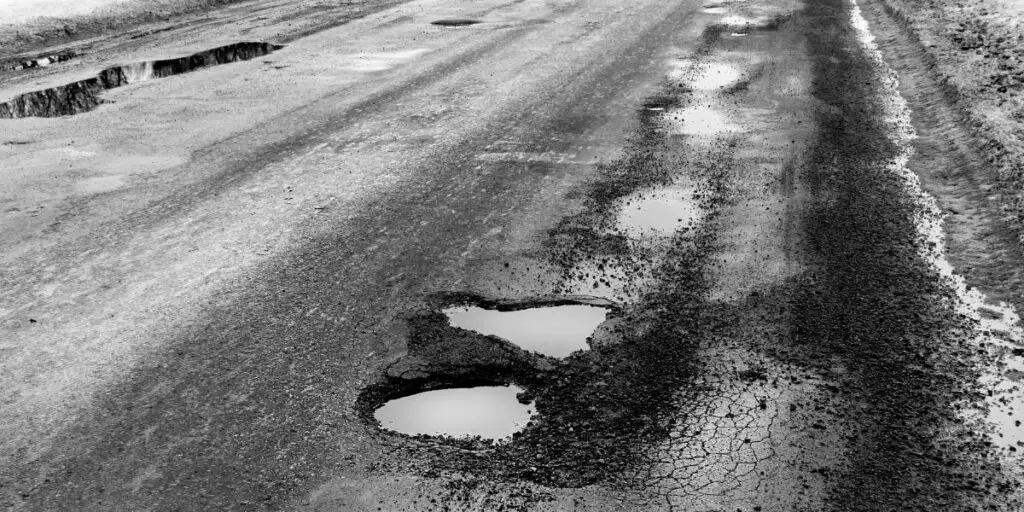
Road surfaces expand significantly in high temperatures. Asphalt, in particular, becomes more plastic and deformable when hot. Road marking paint which is more rigid than the substrate cannot always accommodate this thermal movement, leading to surface cracking and edge lifting. Once the marking film cracks, water infiltration accelerates, combining heat and moisture damage into an accelerated failure cycle.
UV-Driven Colour Fading
Ultraviolet radiation breaks down the chemical bonds in paint pigments and binders. White and yellow road markings are particularly susceptible to UV-induced yellowing or chalking where the binder degrades into a white powdery residue, dramatically reducing colour intensity and daytime luminance. In regions with high solar irradiance, such as the Middle East, Australia, and southern Europe, markings may require replacement significantly more frequently than in temperate climates.
Softening of Thermoplastic Markings
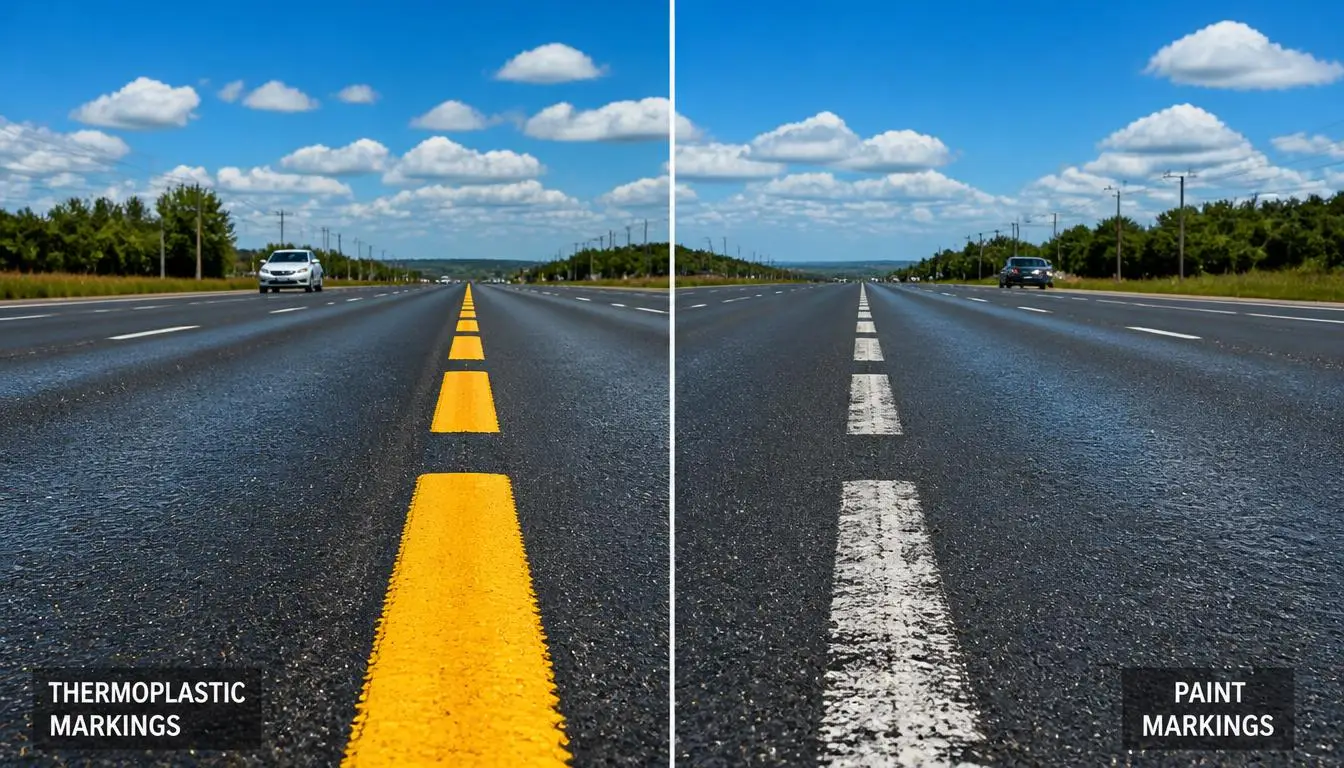
Thermoplastic road markings which are heated and melted during application can soften and deform under extreme heat. On heavily trafficked roads in hot climates, this can cause thermoplastic markings to flow, lose their defined edges, and embed into the road surface unevenly, reducing both aesthetics and retroreflective performance.
Freeze-Thaw Cycles and Cold Weather Degradation
In colder climates, the weather effects on road marking paint longevity are dominated by freeze-thaw cycling, one of the most physically destructive forces road markings face.
Ice Formation Within Micro-Cracks
When water penetrates hairline cracks in road marking paint and then freezes overnight, it expands by approximately 9% in volume. This expansion forces cracks wider, a process called frost wedging. As temperatures rise during the day and fall again at night, repeated freeze-thaw cycles progressively enlarge these cracks until the marking film fractures or delamches from the road surface.
Winter Road Treatment Chemicals
Salt, grit, and de-icing chemicals used to manage snow and ice are highly corrosive to road marking materials. Chloride ions from road salt penetrate the marking film and attack the bond between binder and substrate. Studies by road research institutes across Scandinavia, the UK, and North America have consistently shown that roads treated with de-icing salts experience accelerated road marking degradation sometimes reducing marking lifespan by 30–50% compared to untreated roads.
Snow Plough Abrasion
Physical abrasion from snow plough blades is a major mechanical cause of road marking damage in winter climates. Metal blades in direct contact with road surfaces scrape away thermoplastic and paint markings, particularly at transverse markings such as stop lines and pedestrian crossings which sit perpendicular to the direction of ploughing. Raised pavement markers and profiled markings are particularly vulnerable to snow plough damage.
Humidity, Condensation, and Application Weather Windows
Humidity affects road marking paint not just during its service life but critically during application. High ambient humidity slows the evaporation of solvents in solvent-based paints and the drying of water-based formulations, leading to extended cure times and increased vulnerability during the curing window.
Condensation on road surfaces particularly during early morning application prevents proper adhesion of paint to the substrate. A moisture film between the paint and road surface acts as a release agent, causing the marking to lift or peel within weeks of application. Most road marking specifications require that the road surface temperature be at least 3°C above the dew point at the time of application to prevent condensation-related adhesion failure.
In highly humid tropical climates, road marking materials must be specially formulated to resist moisture absorption throughout their lifespan, as constant high humidity degrades conventional binder systems over time.
Wind and Sand Abrasion in Arid Environments
Desert and semi-arid regions present a distinct set of weather effects on road marking paint longevity. While these climates lack the moisture-driven degradation of temperate or tropical zones, they introduce wind-driven abrasion as a primary degradation mechanism.
Sand particles carried by wind act as a fine abrasive, gradually eroding the surface of road markings and reducing both film thickness and retroreflectivity. In extreme dust storm conditions, a single event can cause measurable degradation of road marking surfaces. Roads in the Gulf region, North Africa, and parts of Central Asia experience significantly higher rates of abrasion-related marking failure, requiring either more frequent replacement cycles or the use of high-durability epoxy and cold plastic materials that offer greater abrasion resistance than standard paint.
Choosing the Right Road Marking Material for Your Climate
Understanding weather effects on road marking paint longevity is only half the solution selecting the right material for the local climate is equally important. Here is a general guide:
Climate Type | Recommended Material | Key Advantage |
Temperate / Rainy | Water-based acrylic with wet retroreflectivity beads | Rapid dry time, good wet visibility |
Hot / High UV | 2-component epoxy or MMA cold plastic | UV resistance, thermal stability |
Cold / High Salt | Modified thermoplastic or cold plastic | Salt and abrasion resistance |
Tropical / Humid | Solvent-based or epoxy systems | Moisture-resistant binder |
Arid / Sandy | Epoxy or cold plastic | High abrasion resistance |
Mixed / Variable | Cold plastic (MMA) | All-round durability |
Methyl Methacrylate (MMA) cold plastic markings are increasingly regarded as the premium choice for challenging climates due to their exceptional resistance across multiple weather stressors, superior retroreflectivity retention, and extended service life of up to 10 years in appropriate conditions.
Even with optimal material selection, a proactive maintenance strategy is essential to manage the weather effects on road marking paint longevity:
Regular Retroreflectivity Monitoring: Deploy mobile retroreflectivity measurement systems annually or biannually to identify markings that have fallen below minimum performance thresholds before they become safety risks.
Seasonal Pre-Treatment: Apply protective surface treatments to road markings before winter to reduce salt and ice damage.
Climate-Specific Reapplication Schedules: Adjust remarking cycles to match local weather patterns shorter cycles in high-UV or high-salt environments, longer cycles in moderate climates with high-durability materials.
Application Timing Controls: Enforce strict weather window protocols for new marking application avoiding rain, high humidity, and temperatures below 5°C or above 35°C to ensure optimal curing and adhesion.
Post-Winter Inspections: Conduct targeted inspections after winter seasons to identify plough-damaged and salt-degraded markings and prioritize rapid replacement on high-speed and high-traffic routes.
Conclusion
The weather effects on road marking paint longevity are far-reaching, complex, and directly tied to road safety outcomes. Rain weakens binders and washes away fresh markings. Heat and UV radiation fade colours and crack paint films. Freeze-thaw cycles fracture markings from within. Salt and snow ploughs accelerate winter degradation. Wind-driven sand abrades markings in arid climates.
The good news is that these challenges are manageable with informed material selection, climate-specific maintenance planning, and strict application protocols. By understanding how weather degrades road markings and taking proactive steps to counteract these effects, road authorities can significantly extend marking lifespan, reduce long-term costs, and most importantly keep roads safe for every driver, cyclist, and pedestrian who relies on them.
Frequently Asked Questions
Q1How long does road marking paint last in different weather conditions?
The lifespan of road marking paint varies considerably by climate and material type. Standard water-based paint in a temperate climate typically lasts 1–3 years. Thermoplastic markings may last 3–6 years in moderate conditions. High-performance cold plastic (MMA) systems can last 7–10 years. However, in high-UV, high-salt, or extreme freeze-thaw environments, these lifespans can be reduced by 30–50%, making climate-appropriate material selection critical for cost-effective road marking management.
Q2 Can road marking paint be applied in the rain?
No rain during or immediately after application is one of the most common causes of premature road marking failure. Water-based paints require a dry surface and sufficient drying time before rainfall to cure properly. Most specifications require at least 30 minutes of dry weather after application, though this can extend to several hours depending on temperature and humidity. Applying in wet conditions results in wash-out, poor adhesion, and significantly reduced marking lifespan.
Q3 Why do road markings fade faster in summer in hot climates?
High temperatures and intense UV radiation accelerate the breakdown of pigment and binder chemistry in road marking paint. UV radiation causes photo-oxidation of the binder, leading to chalking and colour loss. Heat causes thermal expansion and cracking of the marking film. Together, these processes rapidly reduce the daytime luminance and retroreflectivity of road markings, making them harder to see and necessitating more frequent replacement in hot, sunny regions.
Q4 What is the best road marking material for cold, snowy climates?
For cold climates with significant snowfall, de-icing salt use, and freeze-thaw cycling, modified thermoplastic or MMA cold plastic markings are generally recommended. These materials offer superior resistance to salt penetration, better flexibility at low temperatures to resist frost wedging, and greater abrasion resistance against snow plough damage. Profiled markings which have a raised surface texture should be used with caution in areas where snow ploughs operate, as the raised profile increases the risk of mechanical damage.
Q5 How does humidity affect road marking paint adhesion?
High ambient humidity and surface condensation are leading causes of road marking adhesion failure. When a moisture film is present on the road surface during application, paint cannot bond properly to the substrate, leading to delamination and early peeling. Road marking standards typically require that surface temperature be at least 3°C above the dew point at application time. In persistently humid tropical climates, specially formulated moisture-tolerant road marking materials are recommended to maintain adhesion performance throughout the marking’s service life.