Road marking standards in Pakistan have come under sharper focus as the country’s motorway network expands under CPEC and the National Highway Authority (NHA) tightens specifications for new and rehabilitated roads. From the Hakla–D.I. Khan Motorway to the Karakoram Highway and the Hazara and Multan–Sukkur Motorways, every new corridor now comes with detailed marking specifications that contractors are expected to meet before a project is signed off. Understanding road marking standards for Pakistani contractors is no longer optional — it’s a precondition for winning and closing out tenders.
This guide breaks down what governs road marking in Pakistan, the color, dimension, and material specifications contractors need to follow, and how local climate, from Sindh’s summer heat to monsoon rains and northern cold, shapes which materials actually hold up.
Understanding Road Marking Standards in Pakistan
What Are Road Marking Standards?
Road marking standards are the technical specifications that govern line color, width, pattern, retroreflectivity, and material composition for any road marking project. In Pakistan, these specifications ensure markings remain visible and durable across everything from urban arterial roads to the high-speed motorway network connecting Punjab, Khyber Pakhtunkhwa, and the northern areas.
Who Sets the Standards in Pakistan
Road marking specifications in Pakistan are shaped by a mix of national and provincial bodies rather than a single dedicated standard:
- National Highway Authority (NHA): Sets General Specifications for Highway Works, which govern marking materials, application, and acceptance criteria on national highways and motorways, including CPEC route packages.
- Provincial Communication & Works (C&W) Departments: Responsible for specifications on provincial roads, which can vary slightly by province in material approval and tender requirements.
- Pakistan Engineering Council (PEC): Sets professional and design standards that consulting engineers follow when drafting marking specifications for tender documents.
- National Highways & Motorway Police (NHMP): Enforces visibility and compliance on operational motorways and flags markings that fall below safe condition.
Because Pakistan does not yet publish a single bespoke retroreflectivity standard of its own, NHA and consultant-drafted tender specifications typically reference international frameworks — most often ASTM and EN 1436 minimums, as the technical baseline. If you need the full breakdown of those underlying values, our guide to international standards for road marking visibility covers EN 1436 performance classes and ASTM test methods in detail. This guide focuses specifically on how those benchmarks get applied — and adapted — on the ground in Pakistan.
Core Road Marking Standards for Pakistani Contractors
Color Requirements
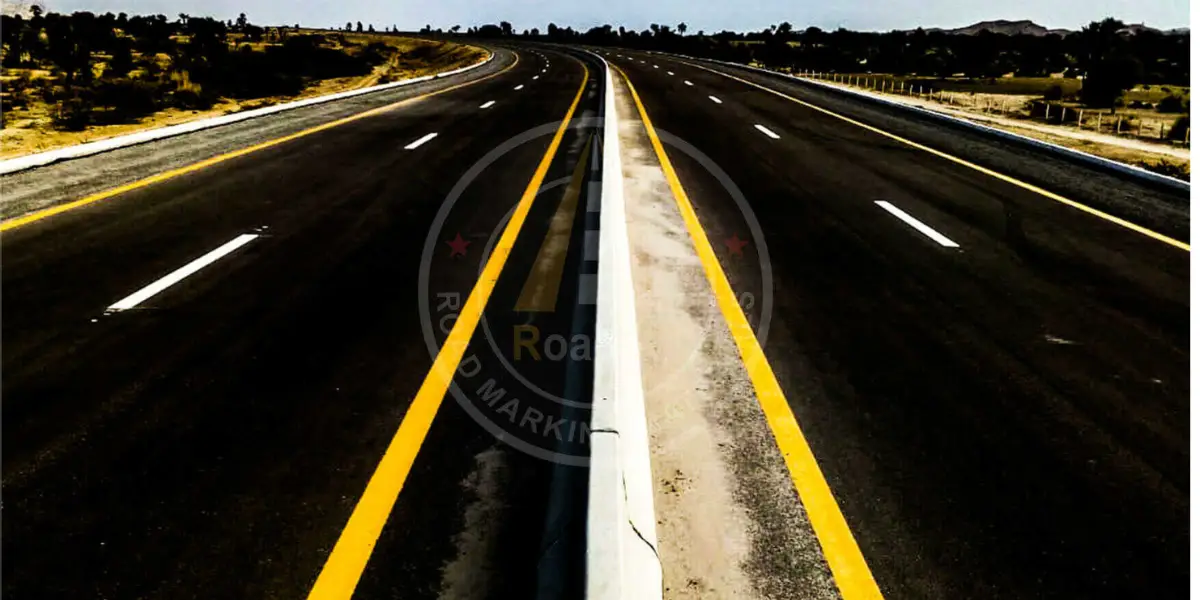
- White lines: Used for lane separation, edge lines, and pedestrian crossings on national highways and motorways. NHA tender specifications generally require high-retroreflectivity white markings for night and monsoon visibility.
- Yellow lines: Used for centerlines on undivided roads, no-parking zones, and restricted areas, particularly in urban and provincial road contracts.
- Other colors: Red and blue are used in limited applications such as bus lanes and designated parking, mainly in urban municipal projects rather than on the national highway network.
Line Dimensions and Thickness
Typical specifications used in NHA and provincial tenders follow patterns consistent with international practice, adapted to local road widths:
Specification | Typical Value |
Standard lane line width | 10–15 cm |
Edge line width | 10–15 cm |
Dashed line gap (longitudinal) | 3–4 m |
Solid line segment length | 2–3 m, depending on road class |
Retroreflectivity (motorway, white) | Tender-specified, typically ≥100 mcd/m²/lux baseline |
Material Specifications
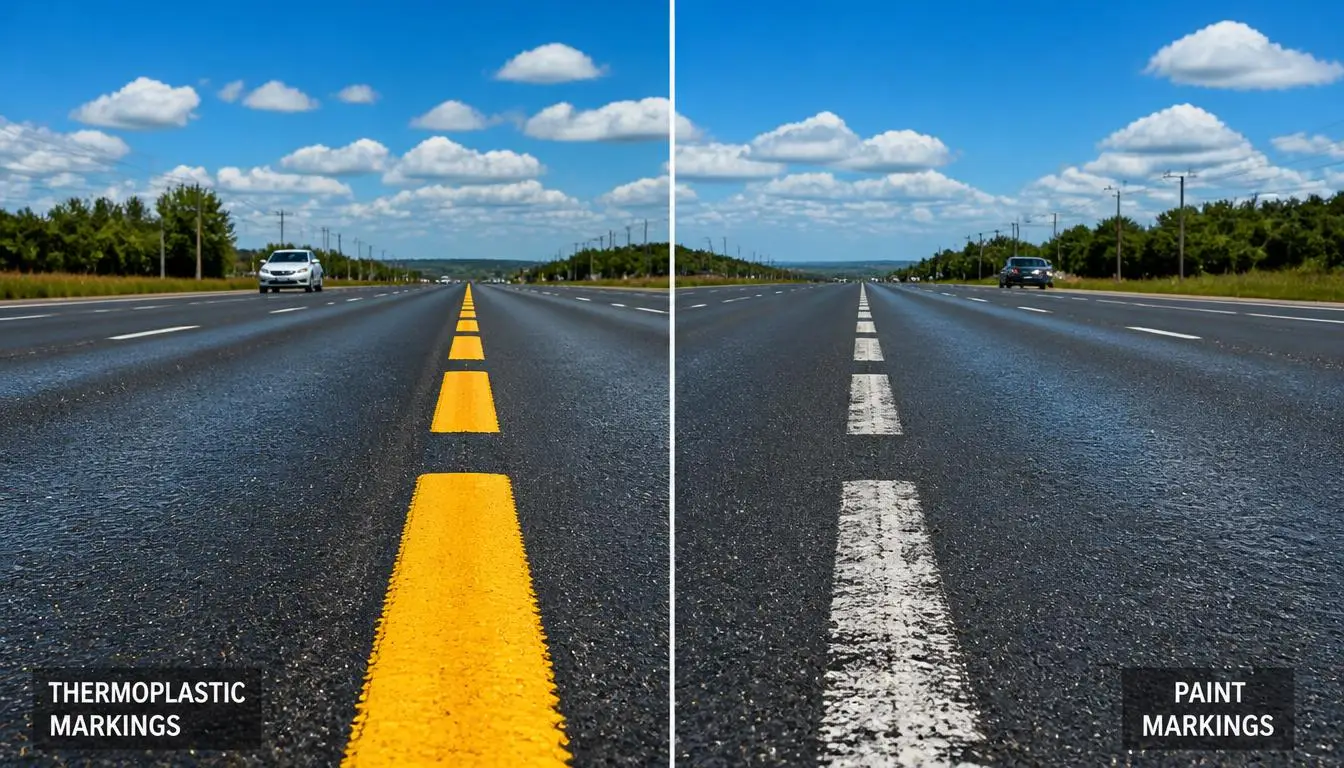
Material choice is where most compliance issues — and most project delays — actually happen. Pakistan’s NHA tenders increasingly specify thermoplastic for motorways and national highways, with paint-based systems still accepted on secondary and provincial roads:
- Thermoplastic paint — the default for motorways and CPEC route packages, valued for durability under heavy axle loads and extreme heat.
- Chlorinated rubber (CR) paint — widely used on secondary roads and industrial coatings; see what CR paint is used for for a fuller breakdown.
- Glass beads — embedded in both thermoplastic and paint systems to deliver night retroreflectivity; required on all motorway tenders.
- Anti-skid paint — specified for junctions, pedestrian crossings, and school zones where braking distances matter.
- Kerbstone paint — used for curb delineation on urban and motorway interchange projects.
For a side-by-side look at cost, durability, and where each material makes sense, our thermoplastic vs. paint comparison walks through the trade-offs in detail.
Installation and Maintenance Procedures
Pre-Installation Requirements
NHA and provincial specifications require the road surface to be clean, dry, and properly primed before application, with strict curing-time and surface-temperature thresholds. Our step-by-step road marking application guide covers the full process contractors and road authorities in Pakistan are expected to follow on site.
Quality Control Measures
Contractors working on NHA-funded and CPEC-linked projects are typically required to verify:
- Line alignment and straightness
- Color consistency and daytime luminance
- Adhesion strength and film thickness
- Retroreflectivity, using a portable retroreflectometer, see how retroreflective markings work for how this is measured and why it matters at night
Maintenance Standards
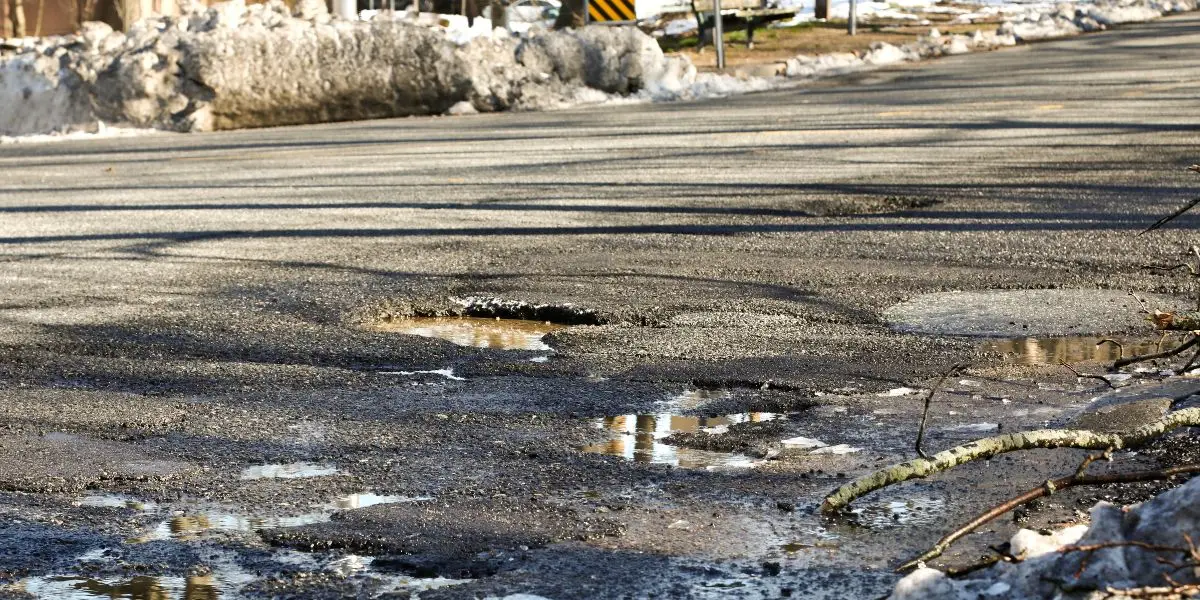
Markings should be refreshed once retroreflectivity drops below the tender-specified minimum, in practice this happens faster in Pakistan than in temperate climates because of UV exposure and monsoon wear. How weather affects road marking paint longevity breaks down realistic repainting intervals for Pakistan’s seasonal extremes rather than relying on a fixed global schedule.
Climate Considerations for Road Marking in Pakistan
Pakistan’s climate range is wider than most regional markets contractors compare it to. Materials need to perform across:
- Summer heat: Punjab and Sindh routinely exceed 45–50°C in summer, which can soften poor-quality paint and reduce glass bead retention if materials aren’t formulated for heat.
- Monsoon rainfall: Wet-night visibility becomes critical during monsoon months, when retroreflectivity matters most and inferior materials fail fastest.
- Northern cold: Routes like the Karakoram Highway see freezing winter temperatures, where brittle or low-grade thermoplastic can crack under thermal stress.
This is the main reason NHA specifications increasingly favor heat- and weather-resistant thermoplastic formulations over standard paint on motorway and highway packages, the performance gap shows up fastest in exactly these conditions.
Where These Standards Get Applied: Pakistan’s Motorway Network
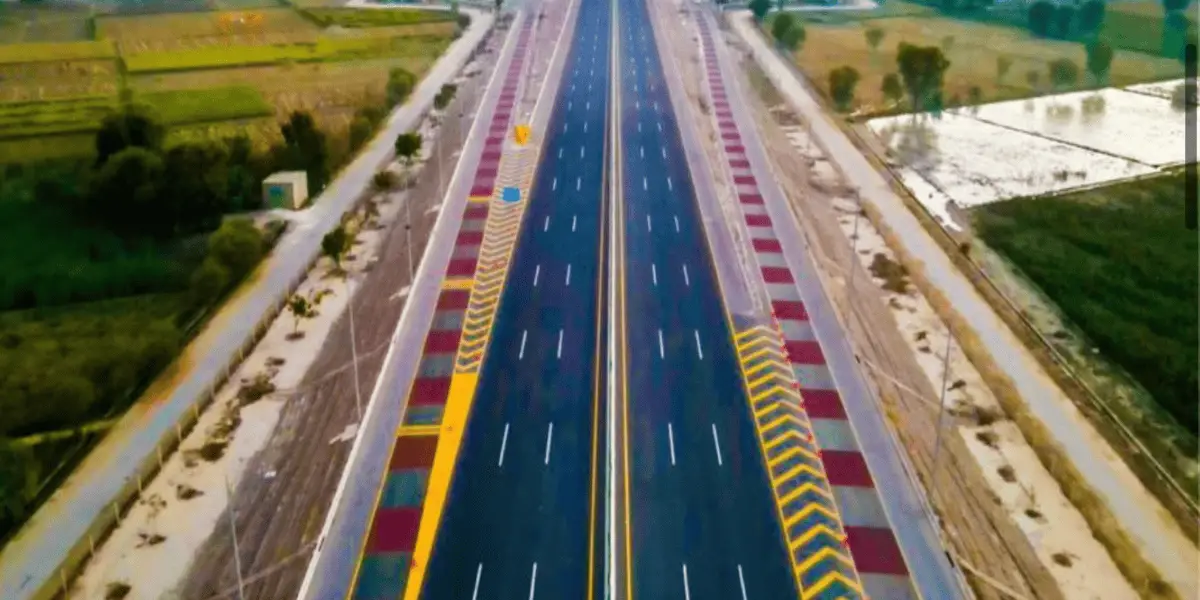
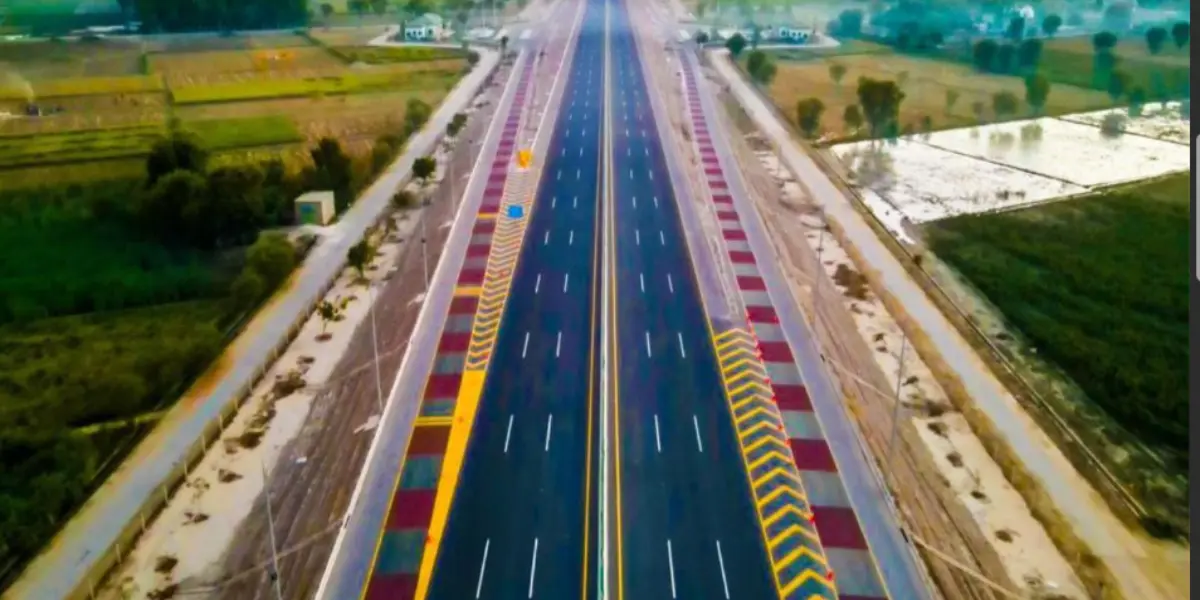
The clearest evidence of how seriously NHA now treats marking compliance is the project pipeline itself. Recent CPEC and motorway packages, including the Hakla–D.I. Khan Motorway, the Karakoram Highway, the Hazara Motorway, the Multan–Sukkur Motorway, the Kalma Chowk Underpass, and the Bhara Kahu Bypass in Islamabad, have all specified thermoplastic, convex, and anti-skid marking systems as standard requirements rather than optional upgrades. See the full project portfolio for examples of these specifications in practice.
Compliance and Documentation
Contractors bidding on NHA and provincial tenders should expect to maintain:
- Material certificates and test reports
- Installation dates, locations, and ambient conditions at the time of application
- Quality inspection and retroreflectivity logs
- Maintenance and re-marking schedules
Frequently Asked Questions
1. What retroreflectivity standard applies to road markings in Pakistan?
Pakistan does not publish its own bespoke retroreflectivity standard. NHA and provincial tender specifications typically reference ASTM and EN 1436 minimums as the technical baseline, with motorway and CPEC projects generally requiring higher performance classes than secondary roads.
2. How often should road markings be repainted in Pakistan?
There’s no single fixed interval. High-traffic motorways exposed to monsoon rain and summer heat typically need re-marking sooner than the 18–24 month range common in milder climates, actual timing should be set by retroreflectivity testing rather than a fixed calendar.
3. Is thermoplastic paint mandatory for motorways in Pakistan?
It isn’t mandated by a single nationwide law, but NHA and CPEC project specifications overwhelmingly favor thermoplastic for motorways and national highways because of its durability under heavy traffic and temperature extremes. Paint-based systems remain acceptable on secondary and provincial roads.
4. Which body regulates road marking standards in Pakistan?
The National Highway Authority sets specifications for national highways and motorways. Provincial Communication & Works departments govern provincial roads, and the Pakistan Engineering Council informs the design standards consultants use when drafting tender specifications.
5. Do road marking standards vary between provinces?
Yes, to a degree. While NHA specifications are consistent across national highways and motorways, provincial C&W departments can set slightly different material approval lists and tender requirements for provincial roads, so contractors working across provinces should confirm local specifications before bidding.